The copperhead snake

Usually species are named after some of their characteristics. The copperhead snake (Agkistrodon spp.) was originally named for the copper like coloration on the dorsal side of its head. The size of an adult copperhead is 20 to 40 inches (51-102 cm). Some sub-species of the copperhead snakes have a different appearance than others and there is some degree of variability within Agkistrodon spp.

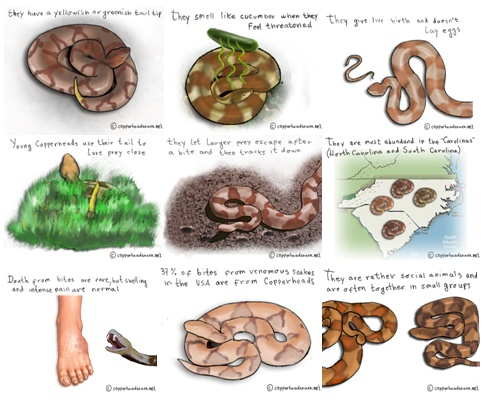
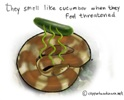
Some strange myths exist about copperhead snakes. One is that black snakes can interbreed with copperheads to make a venomous black snake. Another one is that copperhead snakes smells like cucumber - which is generally not true as they only secretes and odor resembling the odor of cucumber when they feel threathened. The funniest myth about the copperhead snake is that baby copperhead snakes are more venomous than adults.

Actually, even though the copperhead snake is venomous and its bite very painful, a bite from a copperhead snake is generally not deadly.

The copperhead snake is chestnut colored and has bands that are either dark or brown. Young copperhead snakes can be recognized by the yellowish or greenish tip on their tails.

This site focuses on copperhead snakes in the US.

Diet

Mature copperhead snakes prefer rodents such as mice. The video below shows a copperhead slithering through some shrubs.

Life cycle of copperhead snakes

Copperheads are viviparous – their embryos develop inside the female body and she gives live birth to 3-10 young snakes during late summer or early fall. Young snakes measure 8-10 inches (20-26 cm). Young copperhead snakes resemble adults except for a more grayish coloration and a yellowish tip on their tails.

Copperhead snake bites

According to US poison centers a total of 769 cases of copperhead bites were reported in 2001. In total those bites accounted for 37 percent of the total number of venomous snake bites1 (figure 1).

Copperhead Snake Picture

Figure 1 Approximately 37 percent of all venomous snake bites are from copperheads.

In some states the percentage of venomous snake bites caused by the Agkistrodon is much higher. In North Carolina and over a 40 year period, 64 percent of all venomous bites were caused by the copperhead.

Copperhead snake bites can cause swelling, local tissue injury, abnormally low blood pressure, lack of blood clotting and general pain in all limbs. It is however very rare that bites from copperhead snakes leads to death. In recent year there haven’t been many reports about fatal bites from copperheads. However, a former police officer from Madison County, Texas is believed to have died from the poison of a copperhead snake in 2006. The chance of a fatal bite and envenomation by a copperhead is probably less than 1:5000. Bites can however have serious medical consequences and require immediate medical attention.

References

1 Lavones E.J. et al. Initial Experience With Crotalidae Polyvalent Immune Fab Antivenom in the Treatment of Copperhead Snakebite Toxicology 44(2) pp. 200-206 (2004)

Internet resources about the copperhead snake

Wikipedia
Fact Sheet - Ohio Public Library
Ohio Division of Wildlife
University of Michigan
Catch it Wild